|
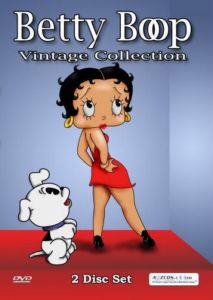
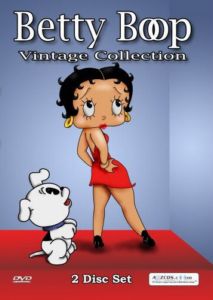
Betty Boop made her first appearance on August 9, 1930 in the cartoon Dizzy Dishes, the sixth installment in Fleischer's Talkartoon series. She was little like her soon-to-be-famous self, however. Grim Natwick, a veteran animator of both Walt Disney's and Ub Iwerks' studios, was largely responsible for creating the character, which he modeled on Helen Kane, a singer and contract player at Paramount Pictures, the studio that distributed Fleischer's cartoons. In keeping with common practice, Natwick made his new character an animal, in this case, a French poodle. Beginning with this cartoon, the character's voice was performed by several different voice actresses until Mae Questel got the role, in 1931, and kept it for the rest of the series. Natwick himself later conceded that Betty's original look was quite ugly. [citation needed] The animator redesigned her in 1932 to be recognizably human in the cartoon Any Rags. Her floppy poodle ears became hoop earrings, and her poodle fur became a bob haircut. She appeared in ten cartoons as a supporting character, a flapper girl with more heart than brains. In individual cartoons she was called "Nancy Lee" and "Nan McGrew". She usually served as studio star Bimbo's girlfriend. Although some claim that Betty's first name was established in the 1931 Screen Songs cartoon Betty Co-ed, this "Betty" was, in truth, an entirely different character. Though the song itself may have led to Betty's eventual christening, any references to Betty Co-ed as a Betty Boop vehicle have been made in error. (The official Betty Boop website describes the titular character as a "prototype" of Betty.) In all, there were at least 12 Screen Songs cartoons that featured either Betty Boop or a similar character. There were only two films that are known, where Betty was featured in color. 'Poor Cinderella' and 'Crazy Town' (1932). ( Although she appeared in the color feature film Who Framed Roger Rabbit, Betty appeared in her traditional black and white. Betty made light of it in the film, saying work may have been slow since cartoons went to color, but she still had what it took.
Fleischer produced his Inkwell films for Bray Productions until, in 1921, he established Fleischer Studios (initially named "Out of the Inkwell Films") to produce animated cartoons and short subjects. Koko and Fitz remained the stars of the Out of the Inkwell series, which was renamed Inkwell Imps in 1927. The Fleischer Studio invented the "bouncing ball" technique for its "Song Car-Tunes" series of animated sing-along shorts. In 1924, Fleischer added synchronized sound to this series, using the Phonofilm sound-on-film process developed by Lee De Forest; these Song Car-tunes would last until 1926. This was years before Walt Disney's Steamboat Willie (1928), which is often mistakenly cited as the first cartoon to synchronize sound with animation. In 1923, Fleischer made a 50-minute animated film to explain Albert Einstein's theory of relativity. In 1925, he made a feature-length film about Charles Darwin's theory of evolution combining animation and live action. Several of Fleischer's cartoons had soundtracks by (and often live or rotoscoped footage of) some of the leading jazz performers of the time, most notably Cab Calloway, Louis Armstrong and Don Redman. Black musicians contributed songs to Betty Boop cartoons as well. Fleischer's use of featured black performers was unusual at a time when cinematic depictions of blacks were often minor and/or stereotypical roles.
|